
FICTION || Obioha Testimony Chidera: Melon Seeds

Updated: 4 hours ago
Penned in Rage Journal, Amplifying Marginalized Voices
Obiora
I didn't understand why the village breeze felt cooler than the one in Abuja, even though Suleja was located at a higher altitude. Maybe it was because of the many trees that were scattered on every street. Two Oroma trees, one Aki Oyibo tree, and one ube tree. It was like this in every house. Except for Izu's house. They had planted Egusi at every corner of the house. So much that if you should walk around the compound at night, you could risk crushing one of the round melons.
Izu insisted on calling them melons, even when everyone called them Egusi. He said it with a certain excitement in his voice, one that sounded like he had laughed too much. He also insisted on calling me James, instead of Obiora. It was better than “Onye Abuja” that he always called me.
I was always at Izu's place whenever we came to the village. He would take me to go see the masquerades, or to the river, to swim. He introduced me to all his friends as his brother who came from Abuja. Even though we were just neighbours separated by my father’s tall fence.
The last memory I had of Izu was in his room. Where he drew lines on the concrete floor to play qulé. His father walked in on us, with my legs on Izu's lap and I quickly dropped them and Izu stood up quickly with his eyes to the floor. That night, I could hear a crying voice, and I knew it was Izu's, even though I had never heard him cry. I imagined Izu's bald father, flogging him with a belt, and it made me want to vomit. I dreamt later that Izu dragged me to their compound, and the father started to flog the both of us, and our tears flooded the compound. The next morning, we travelled back to Abuja.
My hands hovered over the old wooden door. I wanted to knock but I didn't know how to, my wrist felt like it had no bones, like it was filled with water. Standing at the door and picturing Izu in my head felt like standing at the edge of a cliff, my heart raced and my body grew stiff. I wouldn't know what to say to him, or how to say it. I was now 18 and he 19. Even in these three years, I remembered Izu every day, so much that standing at this door felt too real.
I was about to knock when the door clicked open, with a lazy screeching sound at the hinges. “Obiora” Izu exclaimed, it sounded more like surprise than excitement. He stretched his hands for a handshake. Not a hug. And he called me Obiora. Not James or Onye Abuja. I could feel something hot rising from my stomach up my throat, I was scared it would come out if I opened my mouth. So, I kept quiet even when he asked me: ‘Wassup?’
It wasn't only the beards on his once smooth face that changed Izu, but the glint in his eyes when he spoke to me was lost, or rather, hidden. The days when he didn't go to the market, he was at De Bunny's place. Not with Umu boys, or at the market square to see the masquerades. Not with me.
One day, when I asked him why he always went to De Bunny's place, he said that he had a girlfriend, and they always stayed under the cashew tree, playing qulé. I imagined Izu, under a tree, with dried wilted cashew leaves on the floor, and a girl, her legs on Izu's lap, both of them playing qulé and laughing together. Something inside my chest twisted and was aching, the heat rushing up my throat.
Izu asked me if I had a girlfriend in Abuja. I turned from the farm where I was facing because it was easier to stare at chickens than watch Izu. I looked at him for half a second, trying to see if he really didn't feel this weight pressing on my chest, knocking out the very air that I breathe. He avoided my eyes when I turned, like he always did since I came, pushing me away even further with his words. When I turned back to the chickens, the red and black rooster had opened a melon with its sharp talons and was eating the seeds with its beak. I picked a stone to chase it away, the way I and Izu always did when we were seated alone in his backyard. But it wasn’t the same anymore, and the Izu I sat across now felt too distant, like a forgotten dream. So, I folded the stone in my hands, absorbing the coldness through its smooth, hard skin. “No” I said, and I got up and left.
Izu
Papa said to me, with a low stern voice, like he was telling a secret, the night he flogged me, that boys like James were not good to be seen with. Boys that rubbed oils on their lips and walked with their hands on their hips like women deceived other men to lie with them. He said it with a certain irritation, rushing the words like they would grow sores on his tongue if he didn't take them out quickly.
I didn't understand what papa said then. And even as papa placed a cloth on my bleeding nose and told me he didn't want me to turn out like those okpontu, I only thought of James, and wondered if he'd see me before he travelled. But when I saw a man, Ihunna, paraded on the streets, naked and bruised, Emeka told me that he had been caught “doing another man, or it was the man doing him,” I felt something in my chest sink, and my stomach ached, even though it was a year later.
I was nothing like Ihunna, I did not keep my hair long or wear women's clothes. James was nothing like Ihunna too. I didn't know if I believed what I had said, and anytime I slept, I saw me and James, naked and bloodied, and people were chanting and chasing after us with sticks and palm fronds. The house where I lived felt smaller, like the walls were closing in on me. I didn’t know if I was growing taller, or if it was the thoughts inside my head that grew; either way, something was growing, and I was suffocating. I started to eat outside with the chickens, at least, they couldn't look into my soul and see all that was in my head, the way I feared Papa did.
Ifeoma was a fine girl, and I was now talking to her, making out with her. It was man and woman, the way it should be. The normal way.
Sometimes, when I am with Ifeoma, she would turn into James, and I would be scared, so scared that I would sometimes push her away.
James didn't come that year for Christmas, or the year after. And in those three years, I told myself that I had forgotten him. That he was just my guy. It shouldn't matter to me whether he came back or not.
Obiora
It rained the day I left Izu's backyard, not in the sky, but in my heart, and the streams had flowed outward through my eyes. It was the last day I saw him. I stayed in my room everyday till after Christmas, and we travelled back to Abuja, with our bags filled with avocados, udala, and melon seeds.

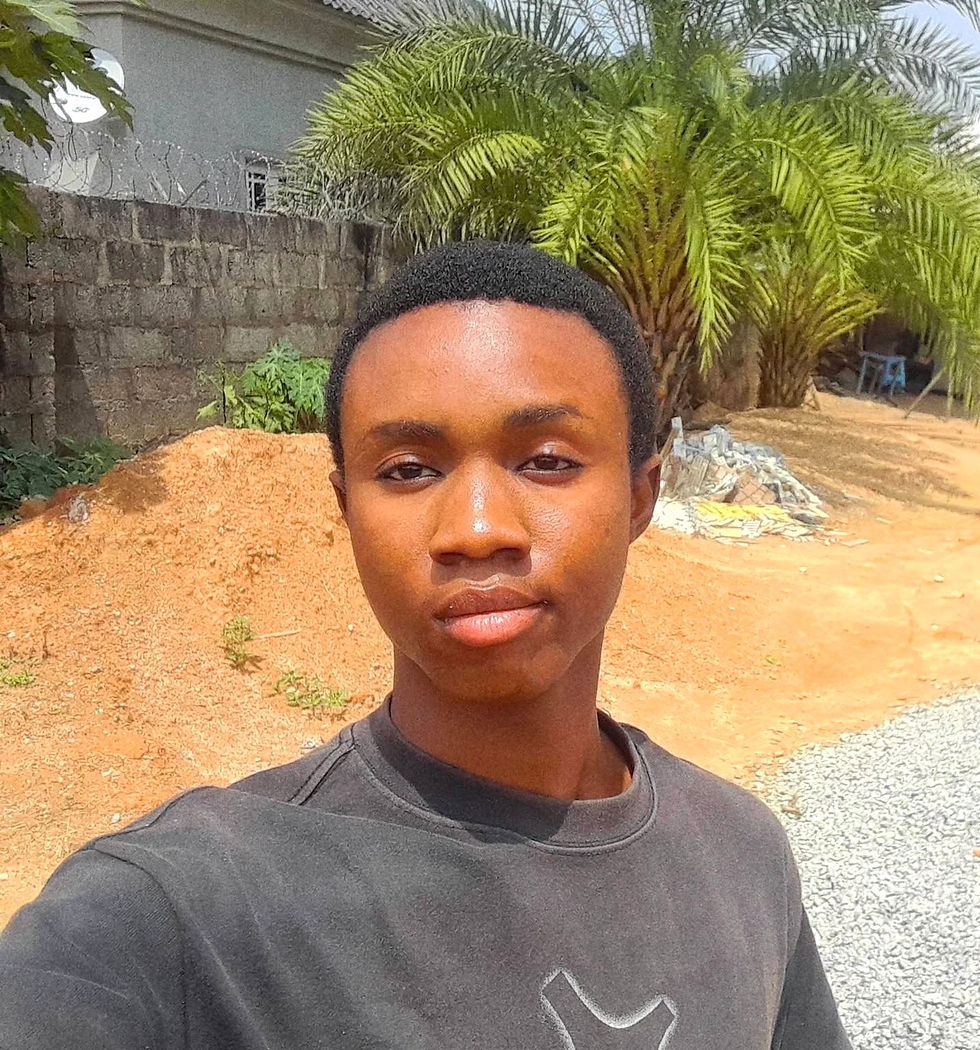
About The Writer
Obioha Testimony Chidera is a Nigerian writer whose fiction explores culture, society, and the complexities of identity. His work is particularly interested in African LGBT experiences, often examining love, alienation, desire, and the ways individuals negotiate themselves within society. His fiction has been published on GoodNovel, where he writes as a web novelist, and featured on the literary platform Words Not Yet Spoken, including his short story “Love Me Jeje.”
He can be reached at https://www.facebook.com/profile.php/?id=100071796570349
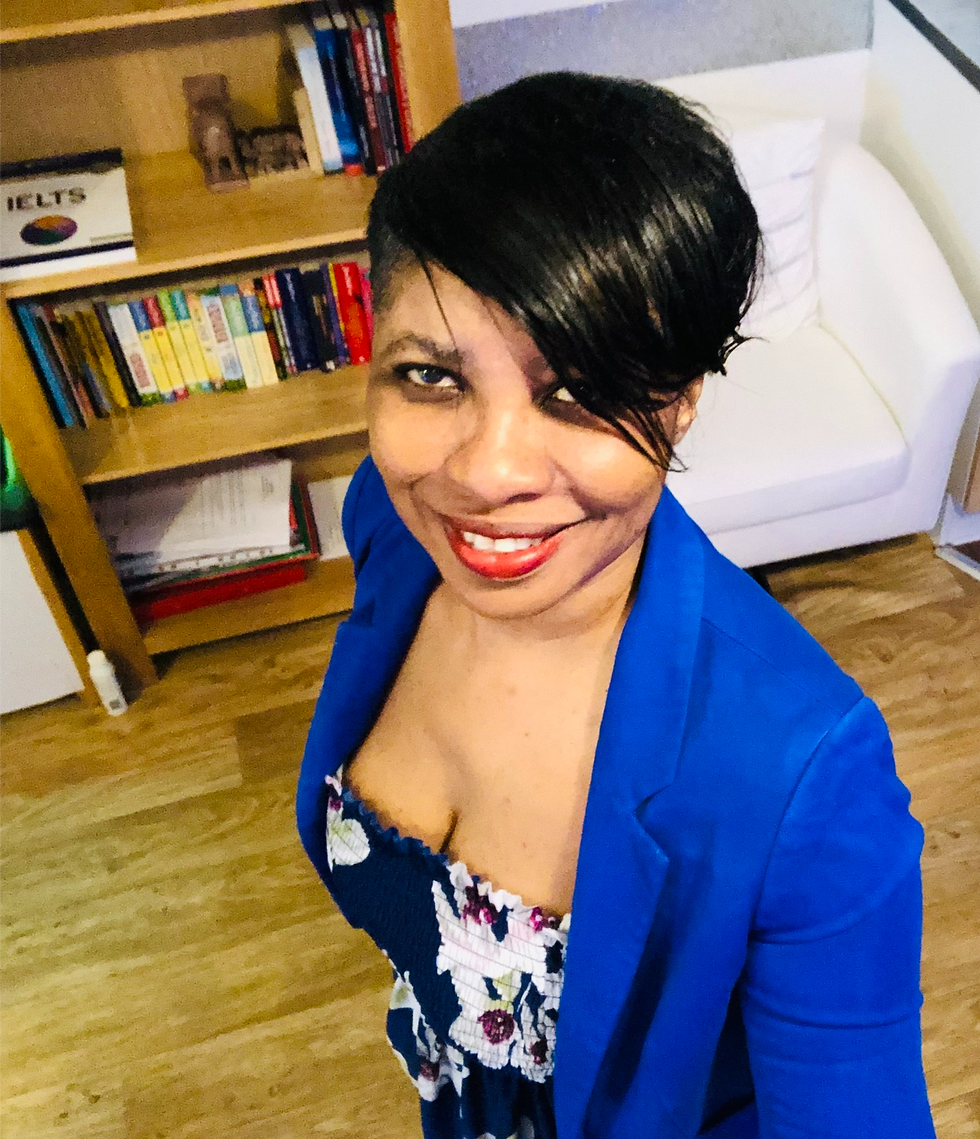
This Piece Was Read by Bridgette James
"What a beautifully nuanced story that thrives on subtext and the image of melon seeds. I understood
the governing metaphor as areflection on how like how bountiful melon seeds germinate, so the protagonist is patiently waiting to grow and flourish into his full protentional or to be in a meaningful romantic relationship.
The plot hingers on what the writer doesn’t explicitly say (Ernest Hemingway called it the "iceberg theory" - also known as the theory of omission) but I read and deduced.
Of course, Ifeoma isn’t a substitute for James, but we giggle at her becoming that in the writer’s subconscious.
© 2026 Penned in Rage. All rights reserved.


Comments